Stay centered and energized when everything is up in the air.
Leading in-between is hard. Everyone’s looking to you for answers and direction and you’re just as unsure, but you still have to show the way. There's no structure to hold onto and the pressure around you is to move forward, fast. That takes a lot of energy but where is that energy coming from when you’re already worn out from trying to figure out what's next in a terrain you don't recognize?
We rarely ask ourselves that. We think we need more sleep, more gym. Maybe. But real energy comes from two places: quality connection with ourselves, and quality connection with others. And those are the first two things we skip when we're under pressure to perform.
I’m Tünde Horvath, Master Certified Leadership and Team Coach.
Over 25 years and 7,000 hours of coaching leaders, I've paid attention to two things at once. One part of me is listening to the story a leader is telling me. Another part is watching how their energy flows, or gets held back, which tells me a lot about the patterns that make up their presence and the ways they connect to others.
What I care about most is helping people feel more grounded by reclaiming parts of themselves they had to shut down in order to succeed, and use their inner compass to navigate in-between territory.
I trained as a Gestalt therapist and hold an Executive Master in Change from INSEAD. My work draws on different schools of psychology, Taoist philosophy, and mythological storytelling.
MA · MCC since 2012 · INSEAD · MIT · 7,000+ coaching hours

Do you know why banyan trees grow so wide they can look like a whole forest?
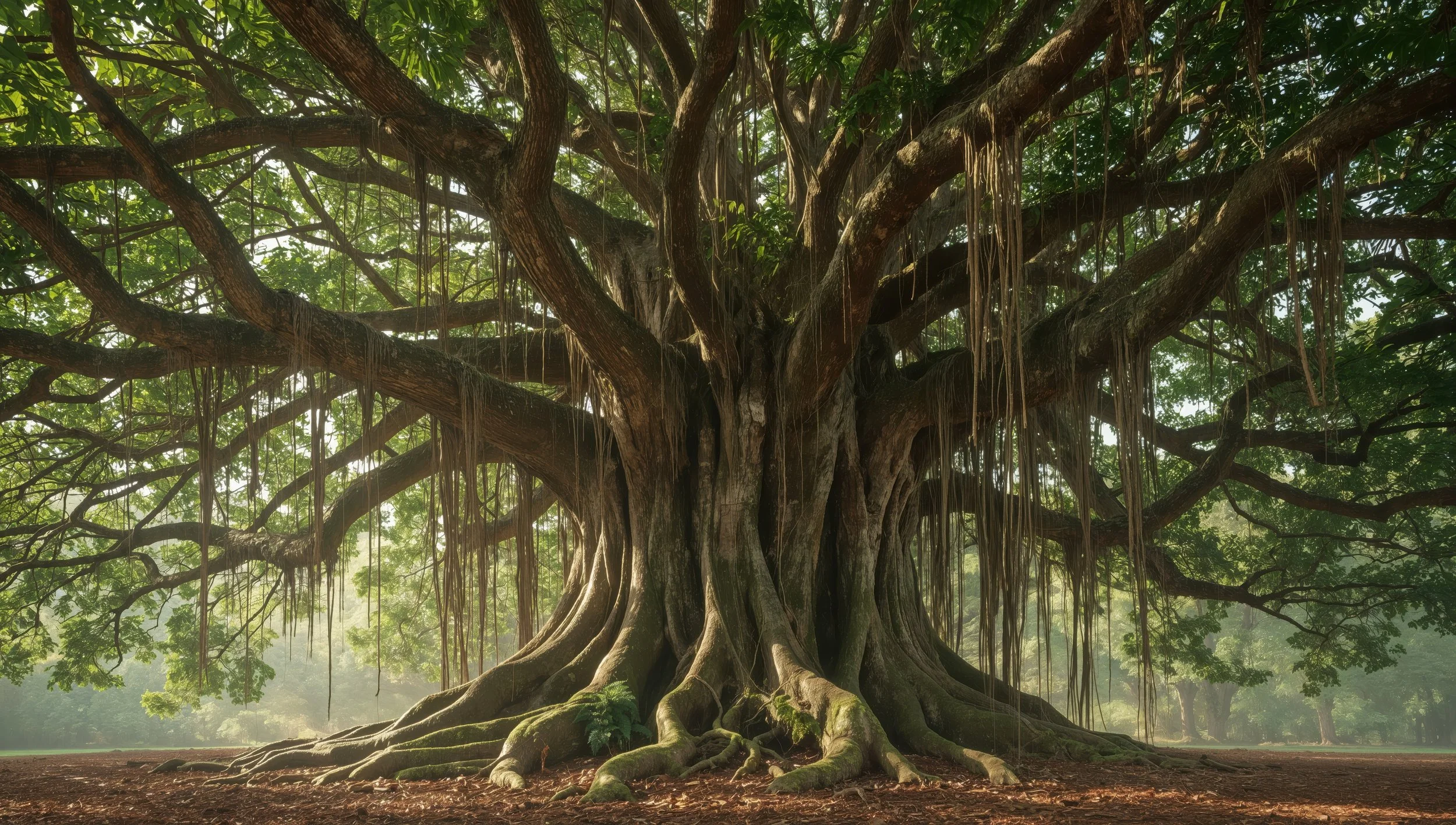
Because they send down aerial roots that hang from the branches and grow into new trunks over time. These aerial roots are the strongest metaphor I know for the in-between.
They're roots, but they hang in the air, exposed to every changing element around them. It's a difficult balancing act, and the leaders I work with often feel exactly this way: longing to feel grounded, but suspended, out in the open, weathering whatever the market or the industry throws at them.
There's a lot to learn from aerial roots, though.
The first thing is that they're not hanging in mid-air on their own. They grow from a branch, connected the whole time to the rest of the tree. They're never as alone as they look.
The second thing is what they become. An aerial root starts out thin and thread-like, quite vulnerable. But as it reaches down toward the ground, it thickens, turns woody, grows a bark of its own. And when it finally touches earth, it becomes a new trunk, indistinguishable from the main one. The strand that used to hang exposed ends up holding the whole tree up.
That's a beautiful image to hold onto when you feel lost or hopeless in the in-between.
The hardest thing is finding the ground, because you're constantly moving as everything keeps changing around you.
That's the part I help with.